How AI is Revolutionizing the Insurance Industry in 2026
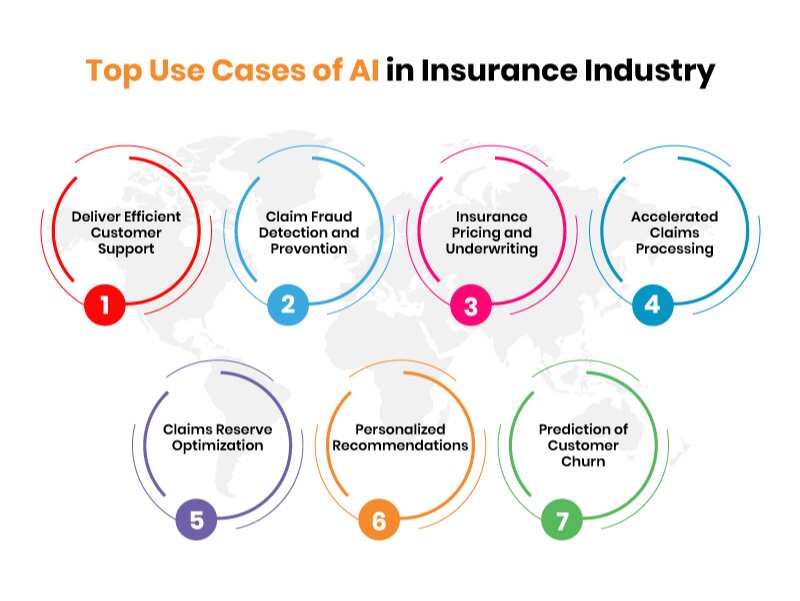
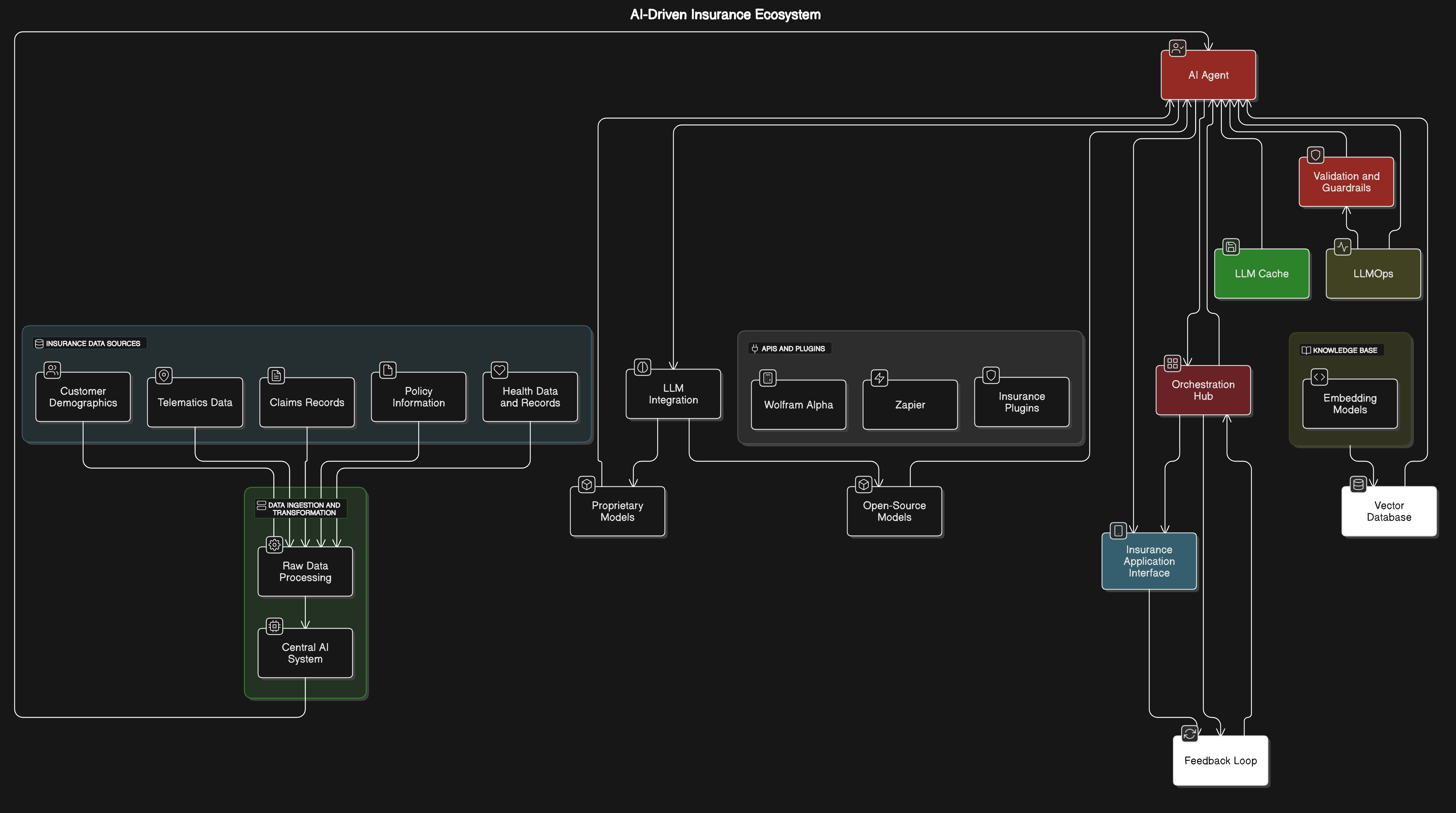
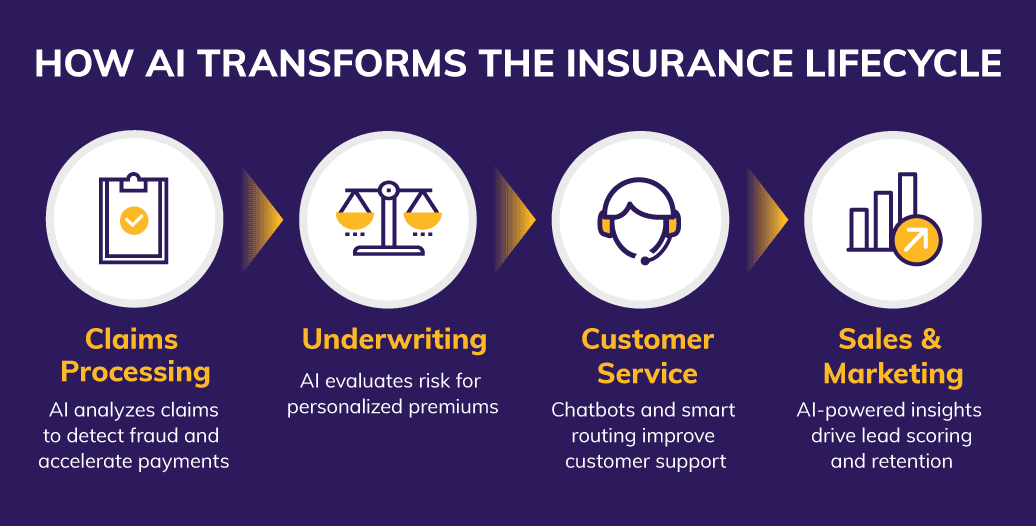
Artificial Intelligence (AI) is no longer a futuristic concept in insurance—it’s actively reshaping the entire value chain from underwriting and risk assessment to claims processing, fraud detection, and customer personalization. As we move through 2026, insurers are shifting from pilots and experiments to large-scale production deployment, driven by agentic AI (autonomous systems that plan, reason, and act), generative AI, and real-time data integration. This transformation promises faster decisions, lower costs, better risk management, and more tailored customer experiences, while addressing challenges like elevated catastrophe losses and regulatory scrutiny.
Here are powerful visuals illustrating AI’s core applications in insurance:

1. Smarter Underwriting and Risk Assessment
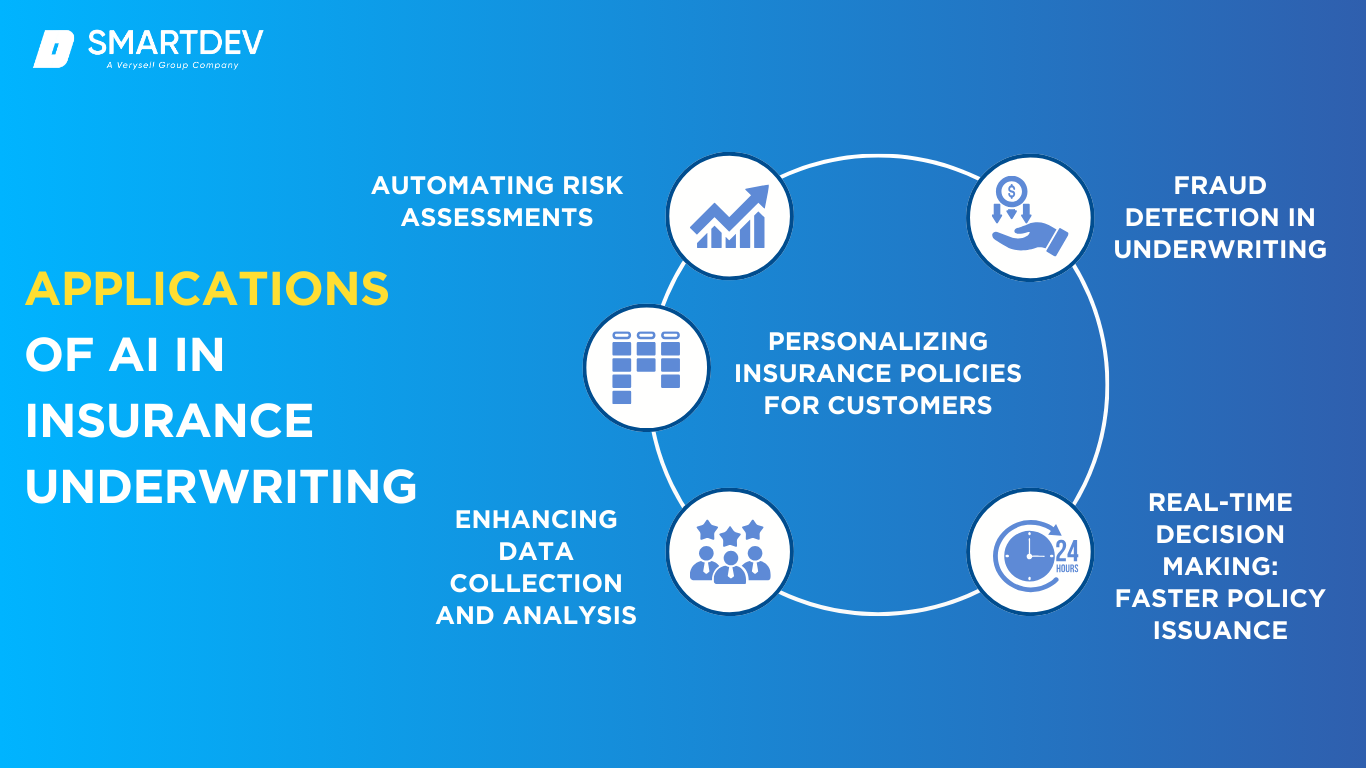
AI analyzes vast datasets—including IoT from wearables, telematics from vehicles, satellite imagery, and external sources—to create dynamic, precise risk profiles. Traditional manual underwriting is being augmented or automated, enabling faster approvals, more accurate pricing, and access to previously underserved markets. In 2026, predictive modeling helps forecast emerging risks like climate events or cyber threats, shifting insurance from “detect and repair” to “predict and prevent.”
This diagram shows how AI streamlines underwriting workflows:
2. Faster, More Accurate Claims Processing
AI enables real-time claims automation—from automated First Notice of Loss (FNOL) and document extraction to damage assessment via image recognition (e.g., drones or photos). Simple claims can be paid instantly, while complex ones get human-in-the-loop oversight. Processing times drop by 50-70%, improving customer satisfaction and reducing leakage.
These visuals highlight claims automation in action:
3. Advanced Fraud Detection
Fraud costs the industry tens of billions annually. AI detects anomalies, patterns, and inconsistencies in real time—analyzing text, images, social networks, and behavioral data. Tools like federated learning allow collaborative detection without sharing sensitive data, boosting accuracy across the industry.
See how AI spots fraud patterns:

4. Hyper-Personalization and Customer Experience
AI powers usage-based insurance (e.g., pay-as-you-drive auto policies), dynamic pricing, and tailored recommendations. Chatbots and virtual assistants handle inquiries 24/7, while generative AI creates personalized policy summaries or marketing. Customers get faster onboarding and relevant products, boosting loyalty.
This infographic captures AI-driven personalization:
5. Broader Industry Impacts and Trends in 2026
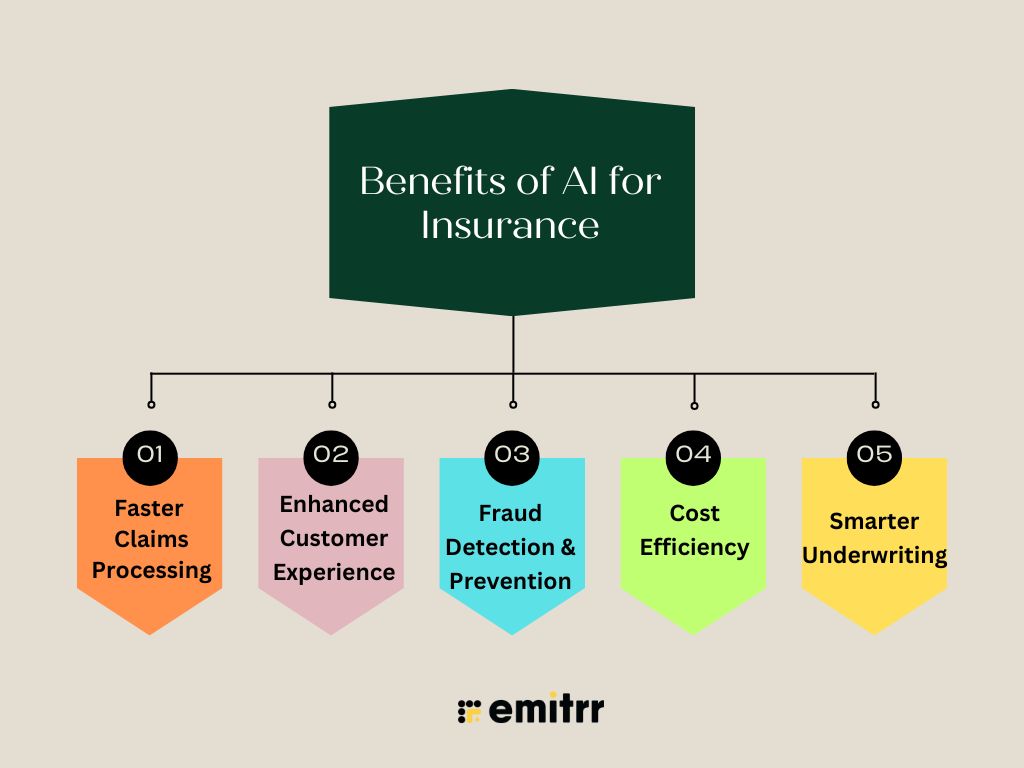
- Operational Efficiency: AI reduces costs by up to 40% in some areas (McKinsey estimates) and addresses talent shortages.
- New Products & Resilience: Better handling of climate risks, cyber threats, and emerging perils.
- Regulatory Focus: Emphasis on transparency, bias mitigation, and explainable AI.
- Human-AI Collaboration: AI augments agents and underwriters, not replaces them—creating smarter, faster experiences.
These futuristic dashboards show AI transforming insurance operations:
In 2026, the insurance market for AI is exploding—projected to grow rapidly as carriers scale proven use cases. Early adopters gain competitive edges in efficiency, customer trust, and innovation.
In summary, AI is turning insurance from a reactive, paperwork-heavy industry into a proactive, data-driven ecosystem. For AI in insurance 2026, AI transforming underwriting claims fraud detection, personalized insurance policies, agentic AI insurance trends, and future of AI in insurance, the shift is already underway—delivering faster, fairer, and more resilient coverage for everyone.