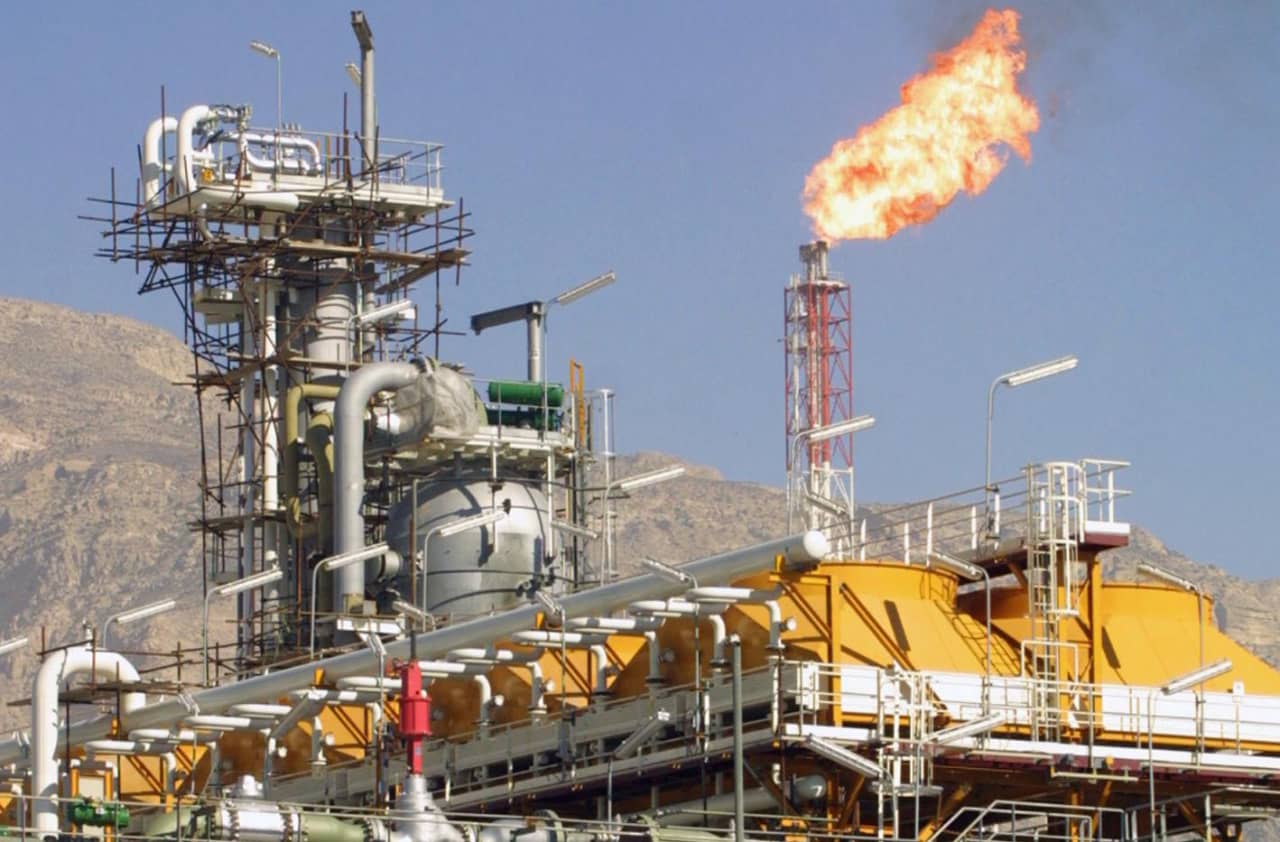
Global oil markets just took another wild ride. Brent crude is hovering around $110 a barrel Thursday, with intraday spikes pushing past $119 earlier, as fears mount over escalating attacks on Middle East energy sites. The trigger? President Donald Trump’s blunt warning that the U.S. would “massively blow up the entirety” of Iran’s South Pars gas field if Tehran keeps hitting Qatar.
It all stems from Israel’s strike on South Pars — the world’s largest natural gas reserve, shared offshore between Iran and Qatar. Explosions damaged parts of the Iranian side, prompting swift Iranian retaliation against Qatar’s Ras Laffan LNG hub and other Gulf facilities in Saudi Arabia, the UAE, and Kuwait. Prices surged overnight, with Brent jumping more than 5% at one point.
Trump’s High-Stakes Warning
Trump posted on Truth Social late Wednesday, insisting the U.S. and Qatar “knew nothing” about Israel’s initial attack. He declared no more Israeli hits on South Pars unless Iran strikes Qatar again. If that happens, he wrote, America would unleash unprecedented force on the entire field — “with or without the help or consent of Israel” — in a way “Iran has never seen or witnessed before.”
The rhetoric landed hard. Markets interpreted it as a direct threat to one of the planet’s most critical energy assets, which supplies a huge chunk of global LNG through Qatar’s side. Oil traders piled on risk premiums fast.
Market Reaction and Immediate Fallout
Here’s the kicker — prices didn’t just climb; they whipsawed. Brent briefly topped $119 before settling near $110-$112, while WTI held around $97-$100. European natural gas futures spiked 20-25%. Analysts point to supply disruption fears: South Pars feeds massive volumes, and any full-scale destruction could choke global flows.
Energy expert Jordan Hale, who tracks Gulf geopolitics for commodity desks, told me: “Trump’s words added rocket fuel to an already hot fire. Traders see this as brinkmanship over the Strait of Hormuz next. One misstep, and we’re talking $150-plus oil in a flash.”
The White House moved to ease pressure elsewhere, waiving the Jones Act for 60 days to boost domestic shipping and floating partial sanctions relief on Iranian crude. But those steps barely dented the panic.
Broader Geopolitical Ripples
But that’s not all. The conflict has morphed into an “energy war,” with strikes now targeting refineries and LNG plants across the region. Qatar condemned Iran’s hit on Ras Laffan as a direct threat to stability. Gulf allies are furious, and Europe is bracing for higher heating bills. U.S. gas prices at the pump? Already up to around $3.84-$3.88 a gallon nationally, a sharp jump from pre-war levels.
Trump’s team insists the goal is deterrence, not endless escalation. Yet the back-and-forth — denial of coordination, then massive threats — keeps nerves frayed. Iranian officials warn of “uncontrollable consequences” if attacks continue.
Final Thought
With oil at $110 amid threats to blow up the world’s biggest gas field, everyday drivers and global economies feel the heat. Trump’s line in the sand aims to protect allies like Qatar, but it risks pushing prices even higher if tensions boil over.
What do you think — smart deterrence or dangerous gamble? Share your view in the comments below, especially if you’re feeling the pinch at the pump in Delhi or anywhere else. Hit share so others can weigh in on this fast-moving crisis.