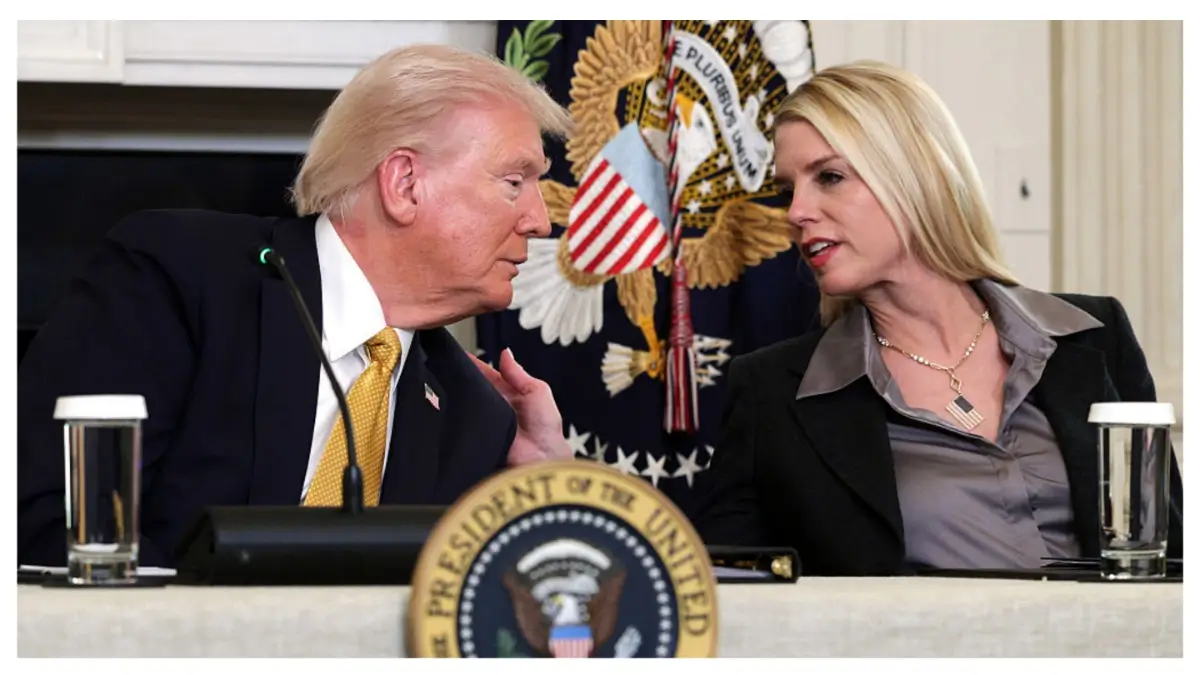
FBI interviews leaked involving Trump and Epstein have set the internet ablaze, with allegations of sexual assault that Pam Bondi’s DOJ allegedly tried to suppress. As these missing Epstein documents surface in March 2026, critics say the details paint a far grimmer picture than anyone anticipated, fueling fresh outrage amid ongoing political scrutiny.
The U.S. Department of Justice under Attorney General Pam Bondi released three additional FBI interview summaries on March 6, 2026, detailing accusations from an unidentified woman who claimed President Donald Trump and Jeffrey Epstein sexually assaulted her when she was a minor. These records, part of the Epstein investigation files mandated for release by Congress, had been partially withheld or redacted earlier, sparking accusations of a deliberate cover-up to shield Trump. The woman’s interviews, conducted four times in 2019 by FBI agents probing Epstein’s sex-trafficking network, include unconfirmed allegations from the 1980s that Trump assaulted her at Epstein’s New York mansion. Only a summary of the first interview was previously public, omitting key details from the subsequent ones that reportedly describe the incident in more explicit terms.
Background on the controversy traces back to late 2025, when the DOJ faced mounting pressure to disclose the full Epstein files following a congressional law aimed at transparency in high-profile sex-trafficking cases. Reports emerged that FBI agents worked overtime to redact materials, with some documents mysteriously vanishing from the DOJ’s public website shortly after initial uploads. House Oversight Committee Democrats, led by figures like Rep. Jamie Raskin, voted to subpoena Bondi, demanding answers on why records mentioning Trump were delayed or altered. “This isn’t just incompetence—it’s interference,” Raskin stated in a press conference, echoing widespread suspicions that the Trump administration prioritized protecting the president over public accountability.
Public reactions have been swift and intense, with the leaked summaries exploding across social media platforms. On X (formerly Twitter), the hashtag #TrumpEpsteinFiles trended nationwide within hours of the release, amassing over 2.5 million posts by March 10, 2026. Users shared screenshots of the unredacted portions, highlighting phrases like “aggressive encounter” and “non-consensual acts” that were absent from earlier versions. Advocacy groups like the National Organization for Women (NOW) condemned the DOJ’s handling, with president Christian Nunes saying, “These revelations confirm what many feared: a pattern of burying inconvenient truths to protect powerful men.” Conservative voices, however, dismissed the claims as “unverified smears” recycled from old lawsuits, urging focus on current policy issues instead.
Experts weigh in on the implications, noting this isn’t isolated. Legal analyst Jeffrey Toobin, in a CNN appearance, compared it to previous Trump scandals: “This echoes the Access Hollywood tape or E. Jean Carroll case—allegations that surface, cause uproar, but often fade without accountability due to legal maneuvering.” Political strategist James Carville added in a podcast interview, “The timing couldn’t be worse for Trump ahead of midterms; it reignites questions about his character and the DOJ’s independence under Bondi, a longtime ally.”
For U.S. readers, the fallout hits close to home on multiple fronts. Politically, it erodes trust in institutions, with polls from Pew Research showing 62% of Americans believing the DOJ prioritizes political loyalty over justice—a 15% jump since 2025. Economically, the distraction could impact ongoing legislative battles over federal funding and ethics reforms. Lifestyle-wise, it fuels broader conversations about accountability in the #MeToo era, prompting renewed discussions in workplaces and schools about power dynamics and reporting assault. Technology plays a role too, as the rapid online spread via platforms like TikTok and Reddit demonstrates how digital leaks can bypass traditional gatekeepers, empowering citizen journalism but also amplifying misinformation.
The woman at the center of the interviews remains anonymous, but her accounts describe meeting Epstein through modeling connections in the 1980s, leading to encounters with Trump. While unproven in court, the FBI notes assessed her credibility during the Epstein probe, though no charges followed. Trump has denied all Epstein-related allegations, calling them “fake news” in a March 7 Truth Social post, while Bondi’s office insists the redactions were for victim privacy, not political protection.
To contextualize this against Trump’s past controversies, here’s a comparison table of similar allegations:
| Scandal/Event | Year | Key Allegation | Outcome/Status | Public Impact |
|---|---|---|---|---|
| E. Jean Carroll Case | 2019 | Sexual assault in 1990s | Trump found liable (2023), ordered to pay $5M+ | Boosted #MeToo, affected 2024 election |
| Access Hollywood Tape | 2016 | “Grab them” comments | No legal action, but damaged campaign | Viral outrage, shifted women’s votes |
| Epstein Files Leak (2026) | 2026 | Assault with Epstein in 1980s | Ongoing scrutiny, no charges yet | Renewed DOJ distrust, midterm fallout |
| Stormy Daniels Payment | 2018 | Hush money for affair | Conviction in 2024 (34 counts) | Legal precedent, hurt public image |
| Other Accusers (20+ women) | 1990s–2010s | Various harassment/assault claims | Mostly denied/settled, no convictions | Cumulative damage to reputation |
As the story unfolds, calls for an independent probe into the DOJ’s file management grow louder, with bipartisan support emerging in Congress. This could reshape oversight of federal investigations, especially those involving sitting presidents.
Frequently Asked Questions (FAQ)
Q: What exactly do the leaked FBI interviews allege against Trump? A: The summaries detail unconfirmed claims of a non-consensual sexual encounter involving Trump and Epstein in the 1980s, based on four 2019 FBI interviews with an accuser.
Q: Why did the DOJ under Bondi withhold these documents? A: Critics allege it was to protect Trump, a close ally of Bondi; the DOJ claims redactions were for victim privacy and legal compliance.
Q: How have the leaks impacted Trump’s political standing? A: They’ve reignited scandals, potentially affecting midterm elections by eroding trust among independents and women voters.
Q: Are the allegations proven? A: No—the FBI summaries are investigative notes, not court verdicts, and Trump has denied them vehemently.
Q: What happens next with the Epstein files? A: Congress may push for full unredacted release, with subpoenas for Bondi and further hearings planned.
By Sam Michael Follow us on X @realnewshubs and subscribe for push notifications